
Brighten a Room from the House Next Door
As we approach the 25th anniversary of 9/11, I am seeing, once again, so many stories of heroism, bravery, and human connection. After 25 years, there are still no words to describe the tragedy and heartbreak of that day.
But, as we are so often reminded by Mr. Rogers, we can "look for the helpers." And when we do, we find them everywhere—not only among the firefighters and first responders, but among the ordinary citizens who gave their lives trying to save others.
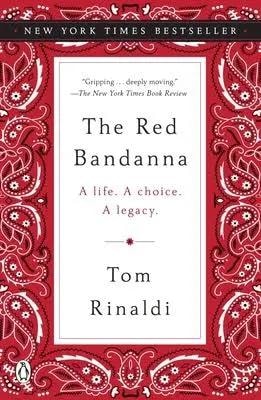
One story keeps popping up in my feed: The Red Bandanna by Tom Rinaldi. It is the story of Welles Crowther, a young man who, wearing his trademark red bandanna, repeatedly went back into the towers to help people escape. He did not survive, but countless survivors remember being helped by a man with a red bandanna. Sacrificing his life for theirs.
I added the book to the pile of books for my son, Thomas, to look through. He, like his father, prefers nonfiction. To be honest, I didn't know much about the book. I had simply added it to the pile.
We started reading, and on the first night Thomas looked at me and asked, "Are you going to be able to do this?"
I assured him I was.
I do not consider myself a particularly sappy person. I am usually cut-and-dried and have a look that could elicit sheer terror in my children if they didn't do what was asked of them. Despite "the look", since having children, I can cry even during a laundry detergent commercial.
It is a wonderful story about Welles, his family, his upbringing, his sisters, his parents, and the extraordinary love they had for him. It also tells the story through the eyes of the many people Welles helped that day: the young man who guided people down the stairs, who covered their noses and mouths with his red bandanna to help them breathe, who kept going back into the towers when he could have escaped himself.
How much he gave of himself to save others.
And yes, there were tears.
But what really resonated with me was the way Welles was described by his family. It reminded me so much of Thomas.
A big part of what reading does is allow the reader to live another life or to see yourself—or someone you love—in the characters of a book. It creates empathy. It gives you an alternate way of looking at things. It helps us describe feelings that we otherwise might not know how to put into words.
Reading allows us to escape to another world—whether that world exists only in our heads or in the pages of a book. And sometimes, unexpectedly, it allows us to see the people we know best in a completely different way.
Reading about Welles Crowther, a 24-year-old man just starting his adult life, I could see so much of Thomas in him. His laughter, his love for his sisters and parents, his friends. So many of the descriptions of Welles resonated with me. Sometimes it's hard to describe your own children, a parent is often too close. Seeing the words on paper to describe Welles made my heart leap—and break.
In fact, I used a quotation from the book in Thomas' senior yearbook. Welles' sister, Honor, used the words in her eulogy for him:
"He could brighten a room from the house next door."
What better way to describe your brother?
Full of joy, warmth and happiness.
And what better way to remember him.
Enjoy stories like this one? Subscribe to The Happy Readers on Substack.
Subscribe